The Ultimate Guide to Access Control Systems_ Enhancing Security and Efficiency
0 likes | 16 Views
Access control systems are essential for enhancing security and operational efficiency by managing entry to physical spaces. This guide covers the basics of access control systems, including types, benefits, and emerging trends such as mobile access, AI, and biometric advancements. It also provides tips for choosing the right system to meet your organization's security and scalability needs.


The Ultimate Guide to Access Control Systems_ Enhancing Security and Efficiency
E N D
Presentation Transcript
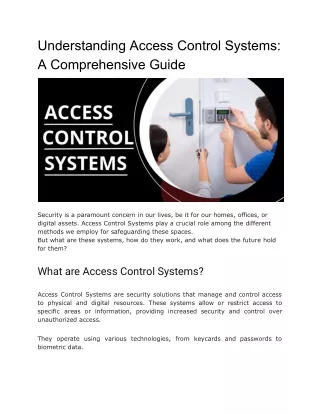
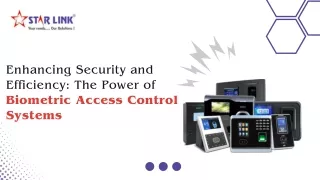
The Systems: Enhancing Security and Efficiency Ultimate Guide to Access Control In today’s increasingly interconnected world, managing access to physical spaces, like offices, facilities, and sensitive areas, is crucial for both security and operational efficiency. Access control systems serve as a foundational layer of security, allowing organizations to determine who can enter specific areas and when. They range from simple lock-and-key setups to sophisticated biometric and mobile-enabled solutions. In this blog post, we’ll explore the basics of access control systems, the types available, their benefits, and emerging trends in the industry. What is an Access Control System? An access control system is a security feature that restricts unauthorized entry to specific locations within a building or property. At its core, it is a way to verify identities, authenticate individuals, and control their movement based on predefined access rights. The goal is to protect both the physical environment and the valuable data, equipment, or information contained within it. Key Components of an Access Control System 1. Credentials — The tools that users employ to gain entry, which can range from physical keys, access cards, or fobs to biometric identifiers like fingerprints or iris scans. 2. Readers and Keypads — Devices that recognize and authenticate the presented credential. These can be card readers, fingerprint scanners, or touchpad PIN entry systems. 3. Access Control Panels — Often considered the brain of the system, these devices process and relay information from the reader or keypad to the database to approve or deny access.
4. Software — The management system that allows administrators to configure permissions, track activity, and monitor the system. Many modern systems are cloud-based, enabling remote management. 5. Locks — Electronic locks that secure the doors. When authorized, these locks disengage, allowing access. Types of Access Control Systems There are several types of access control systems to meet varying needs and budgets: 1. Discretionary Access Control (DAC) In DAC systems, the business or property owner has full control over access rights, often assigning permissions manually. These systems are flexible but can sometimes present security risks due to their reliance on human oversight. 2. Mandatory Access Control (MAC) A more rigid approach, MAC systems assign access based on a centralized security policy that users cannot override. This type of system is commonly used in high-security environments such as government buildings. 3. Role-Based Access Control (RBAC) In RBAC systems, permissions are based on roles or job functions within an organization. This is a popular option for businesses, as it streamlines permissions management, allowing for quick changes in user roles. 4. Biometric Access Control Biometric systems use unique physical characteristics, like fingerprints, facial recognition, or iris scans, to authenticate users. While highly secure, biometric systems can also be more expensive and require maintenance for accuracy. 5. Cloud-Based Access Control Cloud-based systems are increasingly popular due to their remote management capabilities, real-time updates, and lower infrastructure costs. They also offer the advantage of integration with other cloud-based software.
Benefits of Access Control Systems 1. Enhanced Security Access control systems protect against unauthorized entry, reducing the risk of theft, data breaches, and physical harm. Advanced systems can also monitor who accesses sensitive areas, adding a layer of accountability. 2. Efficient Management of Permissions Role-based systems allow for centralized permission management. When someone joins, changes positions, or leaves the company, administrators can quickly adjust access rights, saving time and reducing errors. 3. Audit Trails and Real-Time Monitoring Many modern access control systems provide real-time monitoring and generate audit trails, enabling businesses to track entry and exit logs. This is useful for incident investigations and compliance with security policies or industry regulations. 4. Improved Visitor Management Access control systems streamline visitor management by providing temporary access codes or badges, reducing the risk associated with guest access while ensuring visitor tracking. 5. Integration with Other Systems Many access control systems integrate with security cameras, fire alarms, and time-and-attendance software, creating a unified approach to managing both security and workforce data. Emerging Trends in Access Control 1. Mobile Access Mobile-based access control allows employees to use their smartphones as a credential to enter facilities, eliminating the need for physical badges or keys. This option is convenient and reduces costs related to replacing lost badges.
2. AI and Machine Learning AI can enhance access control by identifying patterns and anomalies in access data. For instance, if an employee attempts to access a restricted area during unusual hours, the system can automatically flag this as a potential security issue. 3. Biometric Advancements As biometric technology improves, the accuracy and reliability of systems like facial recognition and fingerprint scanning continue to increase. These solutions are becoming faster, more affordable, and more widely used across industries. 4. Cloud-Managed Access Control Cloud technology is transforming access control systems, allowing for remote management, automatic updates, and seamless scalability. Small businesses and enterprises alike benefit from the cloud-based systems. flexibility and cost-effectiveness of 5. Touchless Access Control In response to health concerns, especially following the COVID-19 pandemic, many businesses are moving towards touchless access solutions. Options like facial recognition or QR codes offer a contactless experience for users. Choosing the Right Access Control System for Your Organization When choosing an access control system, consider your organization’s size, budget, security needs, and future growth plans. Here are a few tips to guide you: 1. Assess Your Security Needs Evaluate the level of security required for different areas. High-security zones may require biometric access, while general areas might suffice with card-based systems. 2. Consider Integration with Other Systems If you already use other security or management systems, look for an access
control solution that can seamlessly integrate with them. 3. Plan for Scalability Choose a system that can grow with your business. Cloud-based solutions often offer more scalability than on-premises options. 4. Factor in User Experience An access control system should be convenient and user-friendly to avoid disruptions and encourage adherence to security policies. 5. Evaluate Total Cost of Ownership Consider all costs associated with installation, maintenance, software updates, and potential expansion when selecting a system. Conclusion Access control systems are essential for safeguarding physical spaces and streamlining operations. As technology evolves, these systems offer not only higher levels of security but also greater convenience and flexibility. From traditional card systems to cloud-based and biometric options, there’s a solution for every organization. Choosing the right access control system will depend on balancing your security needs, budget, and the desired user experience. By investing in an access control system, businesses can protect their assets, ensure compliance, and foster a secure environment for employees and visitors alike.