Download
1 / 4
0 likes | 1 Views
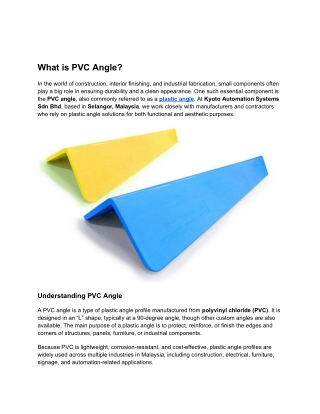
A PVC angle, also known as a plastic angle, is an L-shaped profile made from durable polyvinyl chloride (PVC) material. It is widely used to protect, reinforce, and neatly finish corners and edges in construction, industrial, furniture, and electrical applications. Due to its lightweight nature, corrosion resistance, electrical insulation properties, and cost efficiency, plastic angle is especially suitable for humid environments like Selangor, Malaysia.

E N D
What is PVC Angle? In the world of construction, interior finishing, and industrial fabrication, small components often play a big role in ensuring durability and a clean appearance. One such essential component is the PVC angle, also commonly referred to as a plastic angle. At Kyoto Automation Systems Sdn Bhd, based in Selangor, Malaysia, we work closely with manufacturers and contractors who rely on plastic angle solutions for both functional and aesthetic purposes. Understanding PVC Angle A PVC angle is a type of plastic angle profile manufactured from polyvinyl chloride (PVC). It is designed in an “L” shape, typically at a 90-degree angle, though other custom angles are also available. The main purpose of a plastic angle is to protect, reinforce, or finish the edges and corners of structures, panels, furniture, or industrial components. Because PVC is lightweight, corrosion-resistant, and cost-effective, plastic angle profiles are widely used across multiple industries in Malaysia, including construction, electrical, furniture, signage, and automation-related applications.
Key Features of Plastic Angle One reason plastic angle products are so popular is their combination of strength and flexibility. PVC angles offer several important features: ● Corrosion resistance – Unlike metal angles, plastic angle does not rust, making it ideal for humid environments like Selangor, Malaysia. ● Lightweight material – Easy to transport, cut, and install without heavy tools. ● Electrical insulation – PVC is non-conductive, making it safe for electrical and automation projects. ● Clean finish – Plastic angle provides a neat and professional look for exposed corners and edges. ● Cost efficiency – Compared to aluminum or stainless steel, PVC angles are more affordable while still offering long-term durability. At Kyoto Automation Systems Sdn Bhd, we often recommend plastic angle solutions for projects that require both performance and visual appeal. Common Applications of PVC Angle Plastic angle profiles are extremely versatile. Some of the most common applications include: 1. Construction and Interior Finishing In construction projects, PVC angle is used to protect wall corners, ceiling edges, and tiled surfaces. It helps prevent chipping, cracking, and wear while enhancing the overall appearance. Plastic angle is especially popular in commercial buildings, residential projects, and renovation works across Selangor, Malaysia. 2. Industrial and Automation Use In industrial environments, plastic angle is used to frame panels, cover sharp edges, and protect machine enclosures. Since PVC is resistant to chemicals and moisture, it performs well in factories and automation systems supported by companies like Kyoto Automation Systems Sdn Bhd. 3. Furniture and Cabinetry Furniture manufacturers use plastic angle to reinforce edges of cabinets, shelves, and tables. It improves durability while maintaining a smooth, finished look.
4. Electrical and Cable Management PVC angle is often used in electrical installations to protect cable edges, trunking corners, and control panels. The non-conductive nature of plastic angle makes it a safe choice for electrical environments. Why Choose PVC Angle Over Other Materials? When comparing PVC angle to metal or wooden alternatives, plastic angle offers several clear advantages. In Malaysia’s tropical climate, moisture and heat can cause metal to corrode and wood to warp. PVC, on the other hand, remains stable and reliable over time. Plastic angle also requires minimal maintenance. There is no need for painting, coating, or rust prevention, which makes it a practical long-term solution for businesses and homeowners alike. PVC Angle Solutions in Selangor, Malaysia As a trusted automation and industrial solutions provider, Kyoto Automation Systems Sdn Bhd understands the importance of using the right materials for every application. In Selangor, Malaysia, demand for high-quality plastic angle products continues to grow as industries modernize and construction projects increase. We support clients by helping them select suitable PVC angle profiles based on size, thickness, and application requirements. Whether the project involves industrial automation panels, commercial interiors, or customized fabrication, plastic angle remains a reliable and efficient choice. Environmental Considerations Modern PVC manufacturing has improved significantly, with many plastic angle products now being recyclable. By choosing durable PVC angles, businesses can reduce frequent replacements, leading to less material waste over time. This aligns with sustainable practices increasingly adopted by companies in Selangor, Malaysia. Conclusion So, what is a PVC angle? Simply put, it is a versatile, durable, and cost-effective plastic angle profile used to protect, reinforce, and finish corners and edges across a wide range of applications. From construction and furniture to industrial automation and electrical systems, plastic angle plays a crucial supporting role. At Kyoto Automation Systems Sdn Bhd, we recognize the value of reliable materials in achieving long-lasting results. For projects in Selangor, Malaysia, PVC angle remains a smart solution that balances performance, appearance, and affordability. By choosing the right plastic
angle, businesses and contractors can enhance both the functionality and finish of their projects with confidence. KYOTO AUTOMATION SYSTEMS SDN BHD (527515V) Head Office No 2, Jalan Utama 2/4, Taman Perindustrian Puchong Utama, 47100 Puchong, Selangor D.E, Malaysia Tel: (+6) 03 8061 2555 Fax: (+6) 03 8068 6691 Email: sales@kyoto.com.my, richard@kyoto.com.my, support@kyoto.com.my Location Map: Click Here | Baidu Map