Download
1 / 6
0 likes | 24 Views
Google Ads: Powering Digital Success in the Modern Marketing Landscape

E N D
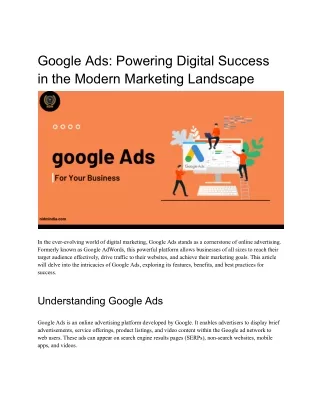
Google Ads: Powering Digital Success in the Modern Marketing Landscape In the ever-evolving world of digital marketing, Google Ads stands as a cornerstone of online advertising. Formerly known as Google AdWords, this powerful platform allows businesses of all sizes to reach their target audience effectively, drive traffic to their websites, and achieve their marketing goals. This article will delve into the intricacies of Google Ads, exploring its features, benefits, and best practices for success. Understanding Google Ads Google Ads is an online advertising platform developed by Google. It enables advertisers to display brief advertisements, service offerings, product listings, and video content within the Google ad network to web users. These ads can appear on search engine results pages (SERPs), non-search websites, mobile apps, and videos.
The platform operates on a pay-per-click (PPC) model, where advertisers bid on specific keywords and pay for each click on their advertisements. This model ensures that advertisers only pay when their ads generate interest, making it a cost-effective solution for businesses of all sizes. Types of Google Ads Campaigns Google Ads offers various campaign types to suit different marketing objectives: 1. Search Network campaigns: Text ads that appear on Google search results pages. 2. Display Network campaigns: Visual ads displayed on websites within the Google Display Network. 3. Video campaigns: Video ads that run on YouTube and across the web. 4. Shopping campaigns: Product listings that appear in Google Shopping results. 5. App campaigns: Ads promoting mobile app installations across Google's networks. 6. Local campaigns: Ads designed to drive foot traffic to physical store locations. Each campaign type serves different purposes and allows advertisers to tailor their approach based on their specific goals and target audience. Key Benefits of Google Ads 1. Targeted Reach: Google Ads allows for precise targeting based on factors such as keywords, location, demographics, and user behavior, ensuring your ads reach the most relevant audience. 2. Measurable Results: The platform provides detailed analytics and reporting, allowing advertisers to track performance and ROI in real-time. 3. Flexibility and Control: Advertisers can set their own budgets, adjust bids, and modify campaigns on the fly to optimize performance. 4. Scalability: Google Ads can accommodate businesses of all sizes, from local shops to multinational corporations. 5. Integration with Other Google Tools: Seamless integration with Google Analytics and other Google marketing tools provides a comprehensive view of your digital marketing efforts.
Best Practices for Google Ads Success 1. Keyword Research and Selection The foundation of any successful Google Ads campaign is thorough keyword research. Use tools like Google Keyword Planner to identify relevant, high-volume keywords with manageable competition. Consider long-tail keywords for more targeted traffic and potentially lower costs. 2. Ad Copy Optimization Craft compelling ad copy that speaks directly to your target audience. Incorporate your target keywords naturally, highlight unique selling propositions, and include a clear call-to-action (CTA). Use ad extensions to provide additional information and increase the visibility of your ads. 3. Landing Page Optimization Ensure your landing pages are relevant to your ad content and provide a seamless user experience. Fast-loading, mobile-responsive pages with clear CTAs can significantly improve conversion rates. 4. Budget Management and Bidding Strategies Set realistic budgets and utilize Google's automated bidding strategies to maximize your ROI. Consider strategies like Target CPA (Cost Per Acquisition) or Target ROAS (Return on Ad Spend) to align your bidding with specific business goals. 5. Ad Group Organization Structure your campaigns into tightly themed ad groups, each focusing on a specific set of closely related keywords. This organization allows for more relevant ad copy and improved Quality Scores.
6. Quality Score Optimization Focus on improving your Quality Score, which affects both ad rankings and costs. Factors influencing Quality Score include click-through rate (CTR), ad relevance, and landing page experience. 7. Regular Monitoring and Optimization Continuously monitor your campaigns' performance and make data-driven adjustments. Regularly review search terms reports, adjust bids, refine targeting, and test different ad variations to improve results over time. 8. Remarketing Strategies Implement remarketing campaigns to re-engage users who have previously interacted with your website or app. This can be an effective way to increase conversions and brand awareness. Advanced Google Ads Techniques As you become more proficient with Google Ads, consider exploring these advanced techniques: 1. Audience Targeting: Utilize custom audiences, in-market audiences, and affinity audiences to reach users based on their interests and behaviors. 2. Ad Customizers: Create dynamic ads that automatically adjust based on user context, such as location or time of day. 3. Responsive Search Ads: Leverage machine learning to automatically test different ad combinations and show the best-performing versions. 4. Smart Bidding: Utilize Google's AI-powered bidding strategies to optimize for conversions or conversion value. 5. Attribution Modeling: Implement advanced attribution models to better understand the customer journey and allocate budget more effectively.
Challenges and Considerations While Google Ads offers tremendous opportunities, it also comes with challenges: 1. Competition: Popular keywords can be highly competitive, driving up costs and making it difficult for smaller businesses to compete. 2. Complexity: The platform's extensive features and constant updates can be overwhelming for beginners. 3. Ad Blindness: As users become more accustomed to online advertising, standing out can be increasingly challenging. 4. Privacy Concerns: Evolving privacy regulations and user preferences may impact targeting capabilities in the future. The Role of Education in Google Ads Mastery Given the complexity and ever-changing nature of Google Ads, continuous learning is essential for success. Many professionals turn to specialized educational programs to enhance their skills and stay current with best practices. When searching for the best digital marketing institute, look for programs that offer comprehensive courses on Google Ads, covering everything from basic setup to advanced strategies. A reputable digital marketing institute will provide hands-on experience with the Google Ads platform, teaching students how to create and manage campaigns, analyze performance data, and adapt strategies based on real-world results. Additionally, these programs often offer certifications recognized by the industry, which can be valuable for career advancement in the digital marketing field. Conclusion Google Ads remains a powerful tool in the digital marketer's arsenal, offering unparalleled reach, targeting capabilities, and measurable results. By understanding the platform's features, adhering to best practices, and continuously optimizing campaigns, businesses can leverage Google Ads to drive significant growth and ROI. As the digital landscape continues to evolve, staying informed about the latest trends and techniques in Google Ads is crucial. Whether you're a seasoned marketer or just starting out, investing in your education through a top-tier digital marketing institute can provide the knowledge and skills needed to excel in this dynamic field.
With the right strategies, ongoing education, and a commitment to data-driven optimization, Google Ads can be a game-changer for businesses of all sizes, helping them connect with their target audience and achieve their marketing objectives in the competitive online marketplace. www.nidmindia.com