Download
1 / 3
0 likes | 14 Views
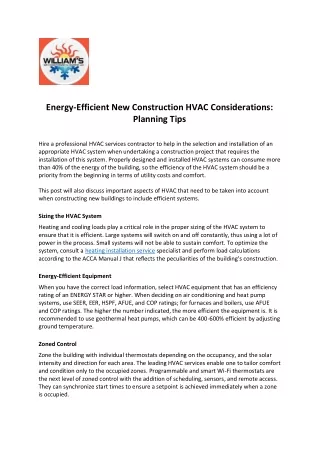
Hire a professional HVAC services contractor to help in the selection and installation of an appropriate HVAC system when undertaking a construction project that requires the installation of this system. Properly designed and installed HVAC systems can consume more than 40% of the energy of the building, so the efficiency of the HVAC system should be a priority from the beginning in terms of utility costs and comfort.

E N D
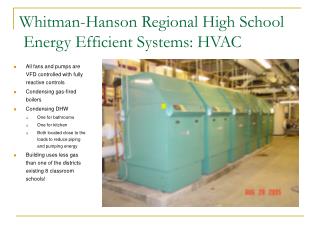
Energy-Efficient New Construction HVAC Considerations: Planning Tips Hire a professional HVAC services contractor to help in the selection and installation of an appropriate HVAC system when undertaking a construction project that requires the installation of this system. Properly designed and installed HVAC systems can consume more than 40% of the energy of the building, so the efficiency of the HVAC system should be a priority from the beginning in terms of utility costs and comfort. This post will also discuss important aspects of HVAC that need to be taken into account when constructing new buildings to include efficient systems. Sizing the HVAC System Heating and cooling loads play a critical role in the proper sizing of the HVAC system to ensure that it is efficient. Large systems will switch on and off constantly, thus using a lot of power in the process. Small systems will not be able to sustain comfort. To optimize the system, consult a heating installation service specialist and perform load calculations according to the ACCA Manual J that reflects the peculiarities of the building’s construction. Energy-Efficient Equipment When you have the correct load information, select HVAC equipment that has an efficiency rating of an ENERGY STAR or higher. When deciding on air conditioning and heat pump systems, use SEER, EER, HSPF, AFUE, and COP ratings; for furnaces and boilers, use AFUE and COP ratings. The higher the number indicated, the more efficient the equipment is. It is recommended to use geothermal heat pumps, which can be 400-600% efficient by adjusting ground temperature. Zoned Control Zone the building with individual thermostats depending on the occupancy, and the solar intensity and direction for each area. The leading HVAC services enable one to tailor comfort and condition only to the occupied zones. Programmable and smart Wi-Fi thermostats are the next level of zoned control with the addition of scheduling, sensors, and remote access. They can synchronize start times to ensure a setpoint is achieved immediately when a zone is occupied.
Fresh Air Ventilation Modern buildings have well-sealed building envelopes that dictate the use of mechanical ventilation to achieve good Indoor Air Quality. Ensure that you utilize energy recovery ventilators (ERVs) or heat recovery ventilators (HRVs) to help you bring fresh air into the building. These devices cool the incoming air with the exhaust air of the building. Displacement ventilation system incorporates natural air stagnation for an extremely effective fresh air supply. Sealing the Building Envelope Insulating gaps and cracks in the building envelope prevents warmed or cooled air from flowing out, thus wasting energy. Ensure proper closure of penetration, joints and openings during construction with calk, foam and weather strips with an AC repair service. It is also important to do a blower door test to determine if there are still leaks in the house. This puts pressure on the building to search for drafts. Make sure to inspect areas surrounding windows and doors, electrical wiring and ducts. Insulation It is equally important to insulate a structure and do it in the right way. Use the prescribed insulation R-value for the particular climate zone as set by the local building codes with reliable HVAC services. Increase attic insulation to R-60, external walls to R-25 and basement walls/ crawl spaces if possible and reasonable. This added value of insulation slows down the transfer of heat in and out of buildings during the different seasons to regulate temperatures. Ductwork Design Central HVAC systems involve the use of ducts for distributing the conditioned air to different zones in the building. Duct leakage causes the furnace or air conditioner to run at a higher rate, using more power than necessary, to maintain the desired temperature. Install rigid metal ducts where the joints and connections shall be sealed with mastic. Encase ductwork in conditioned spaces within building insulation to minimize heat exchange between the duct air and the surrounding environment.
Commissioning & Maintenance Optimize the controls and some of the mechanical parts of the device with the aid of the leading AC installation service. Implement a regular PM program with filter replacement, coil, check and flashing, refrigerant charge and sensor check to maintain its efficiency. To prevent issues from arising in the first place, it is recommended to sign up for an ongoing building analytics service that continuously tracks energy consumption and alerts you of any emerging problems. The Bottom Line The process of choosing, designing and integrating efficient HVAC systems requires enough planning and incorporation into the general building project. It is extremely important to get all the details in the right way, and this can only be possible when working with the right professionals such as the HVAC services. Applying efficiency from the start puts any new building on the right track for many years to come.