Download
1 / 7
0 likes | 2 Views
MAIRHP35WM Unit Technical and Efficiency Analysis examines reported performance data, compliance standards, and efficiency claims associated with the unit. The presentation highlights potential irregularities, explains industry benchmarks, and outlines implications for consumers and installers seeking accurate, transparent HVAC performance information.

E N D
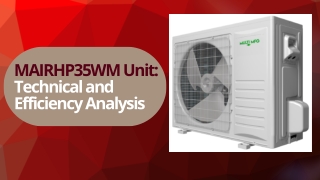
MAIRHP35WM Unit: Technical and Efficiency Analysis
Purpose of This Analysis • Examine technical specifications claimed by the manufacturer • Compare stated efficiency data against recognized industry standards • Highlight key areas of concern in labeling and compliance • Inform consumers, installers, and distributors about potential issues
Claimed Specifications Overview • MAIRHP35WM promoted as a high-efficiency HVAC unit • Manufacturer lists key metrics such as capacity and power use • Efficiency claims are central to consumer purchase decisions • Our review focuses on whether these claims align with independent testing principles
Benchmark Standards in HVAC Efficiency • Recognized metrics for heat pumps and HVAC systems include: – SEER / SEER2 (Seasonal Energy Efficiency Ratio) – EER / EER2 (Energy Efficiency Ratio) – HSPF / HSPF2 (Heating Seasonal Performance Factor) • These ratings are defined under federal test procedures (DOE / AHRI) • Valid ratings must come from certified laboratory testing
Identified Irregularities in Data • Efficiency values provided appear inconsistent with legal standards • Some reported metrics resemble ratings for unrelated categories • Essential ratings required by law are missing or not published • Discrepancies suggest the unit may not perform as marketed • Misleading data can lead to inflated expected savings
Implications for Consumers • Higher energy costs: Overstated efficiency can misinform buyers • Legal compliance risk: Products that don’t meet standards may be unlawful to sell or install • Warranty and support issues: Claims based on invalid data may affect service eligibility • Consumer protection rights: Misleading performance representation may entitle users to compensation
Key Takeaways • The MAIRHP35WM unit’s efficiency claims warrant scrutiny • Critical performance metrics are either missing or inconsistent • Independent compliance review raises red flags about data reliability • Buyers and industry professionals should exercise caution • Visit multi-mfg-mairhp35wm-fraud.com for full analysis and updates.