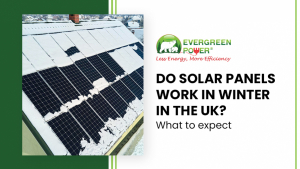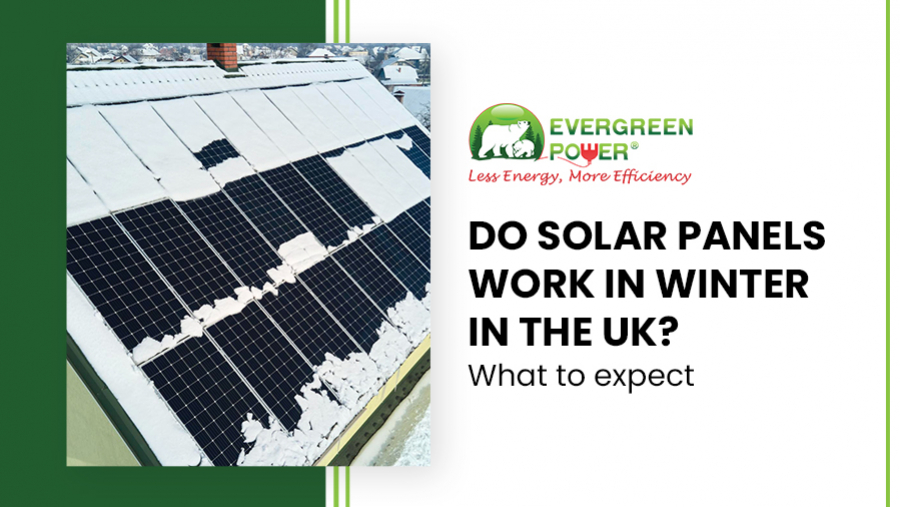
Yes solar PV still works in winter. Output drops because the days are shorter and the sun is lower, but panels generate whenever there’s daylight (not only direct sun). Winter is about setting realistic expectations and running your system smartly.
Who’s this for?
Homeowners weighing up solar PV (with or without a battery) and wondering if the UK’s darker months will scupper the numbers. We’re Evergreen Power UK, installing solar panels winter uk and batteries for UK homes since 2013 so here’s the practical, homeowner-friendly take.
Why output falls in winter (and why that’s okay)
Three things change in the colder months:
- Shorter days. In London, daylight in December is roughly eight hours (give or take), versus twice that at mid summer there’s simply less “generation time” available.
- Low sun angle. The sun sits lower in the sky, reducing irradiance on your roof even at midday.
- Weather. More cloud cover means fewer bright spells though panels still work in diffuse light. National Grid notes PV doesn’t need strong, direct sunshine; it just needs daylight.
Bonus: Cooler air helps panel efficiency. Cold, bright winter days can be surprisingly productive even if total daylight is limited.
What “good” winter performance looks like
- South-facing, unshaded roof: Expect a noticeable drop versus summer but steady daytime generation on bright days.
- East/West roofs: You’ll spread generation across the morning and afternoon, which can help self-consumption on short days.
- Part-shaded roofs: Optimisers can reduce winter shading losses from low sun angles and tall trees/chimneys.
Winter savings stack: five things that move the needle
1) Maximise self-consumption
Run predictable appliances while it’s light: dishwashers, washing machines, slow cookers, heat-pump hot water, or home-working loads. Even small shifts reduce imports when unit prices are highest.
2) Use smart controls
Timers and connected plugs help you nudge daytime loads into solar windows. If you have a diverter for hot water, give it priority on bright spells.
How much does winter change payback?
Solar pays back over years, not weeks, so focus on the annual picture. A sensible mental model:
- Summer: high generation, lots of self-use and export income.
- Shoulder months: balanced generation and consumption.
- Winter: lower generation, so prioritise shifting what you can into daylight and using a battery (if fitted) to smooth evenings.