Download
1 / 4
0 likes | 0 Views
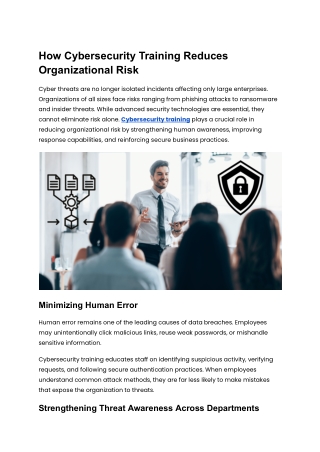
Cyber threats are no longer isolated incidents affecting only large enterprises.<br>Organizations of all sizes face risks ranging from phishing attacks to ransomware<br>and insider threats. While advanced security technologies are essential, they<br>cannot eliminate risk alone.

E N D
How Cybersecurity Training Reduces Organizational Risk Cyber threats are no longer isolated incidents affecting only large enterprises. Organizations of all sizes face risks ranging from phishing attacks to ransomware and insider threats. While advanced security technologies are essential, they cannot eliminate risk alone. Cybersecurity training plays a crucial role in reducing organizational risk by strengthening human awareness, improving response capabilities, and reinforcing secure business practices. Minimizing Human Error Human error remains one of the leading causes of data breaches. Employees may unintentionally click malicious links, reuse weak passwords, or mishandle sensitive information. Cybersecurity training educates staff on identifying suspicious activity, verifying requests, and following secure authentication practices. When employees understand common attack methods, they are far less likely to make mistakes that expose the organization to threats. Strengthening Threat Awareness Across Departments
Risk is not limited to IT teams. Finance, human resources, marketing, and operations all interact with sensitive data. Without proper awareness, vulnerabilities can appear in unexpected places. Comprehensive cybersecurity training ensures that every department understands its role in protecting company assets. This shared responsibility significantly reduces gaps in the organization’s security posture. Improving Incident Response Time The speed at which a threat is detected and reported can determine the severity of its impact. Trained employees are more likely to recognize warning signs and escalate concerns quickly. Cybersecurity training establishes clear reporting procedures and response protocols. Faster detection and coordinated action help contain threats before they cause widespread disruption. Supporting Regulatory Compliance Many industries must comply with data protection and privacy regulations. Failure to meet compliance standards can result in financial penalties and reputational damage. Structured cybersecurity training reinforces secure data handling practices and ensures employees understand regulatory responsibilities. This proactive approach lowers the risk of compliance violations. Protecting Business Continuity Cyber incidents can lead to operational downtime, financial losses, and erosion of customer trust. By reducing the likelihood of successful attacks, cybersecurity training directly supports business continuity planning. Prepared teams are better equipped to prevent disruptions and recover efficiently if an incident occurs. Encouraging a Culture of Security
Reducing organizational risk requires more than policies and technical controls. It demands a culture where security is integrated into daily operations. Cybersecurity training promotes accountability and continuous learning. When employees consistently apply secure practices, risk reduction becomes a sustainable, long term outcome rather than a temporary initiative. Strengthen Your Team Through CloakPoint Organizations seeking reliable learning resources can explore curated cybersecurity training programs through CloakPoint, an affiliate platform that connects businesses with trusted course providers and certification options. By identifying structured and practical training pathways, CloakPoint helps organizations empower their workforce and reduce exposure to evolving cyber threats. Conclusion Organizational risk in the digital age cannot be eliminated entirely, but it can be significantly reduced. Cybersecurity training addresses one of the most critical risk factors: human vulnerability. By minimizing errors, improving threat detection, strengthening compliance, and fostering a culture of security awareness, businesses build stronger defenses against modern threats. Investing in ongoing training is not just a protective measure — it is a strategic decision that enhances resilience, stability, and long term success. FAQs 1. How does cybersecurity training reduce risk? It reduces risk by educating employees on identifying threats, following secure practices, and responding quickly to suspicious activity. 2. Is cybersecurity training only for IT staff?
No. All employees who interact with digital systems and data should receive training to ensure comprehensive protection. 3. How often should organizations conduct cybersecurity training? At least annually, with additional updates or refresher sessions as new threats emerge. 4. Can cybersecurity training prevent all cyber attacks? No training can guarantee complete prevention, but it significantly lowers the likelihood and impact of successful attacks. 5. Does cybersecurity training help with compliance requirements? Yes. Training reinforces proper data handling and security practices that align with regulatory standards.








![[PDF READ ONLINE] How to Measure Anything in Cybersecurity Risk](https://cdn7.slideserve.com/12462754/slide1-dt.jpg)