online proctoring system
The final and most critical stage of the educational cycle is evaluation. For decades, the process of grading has been synonymous with logistical nightmares, human bias, and delayed feedback


online proctoring system
E N D
Presentation Transcript
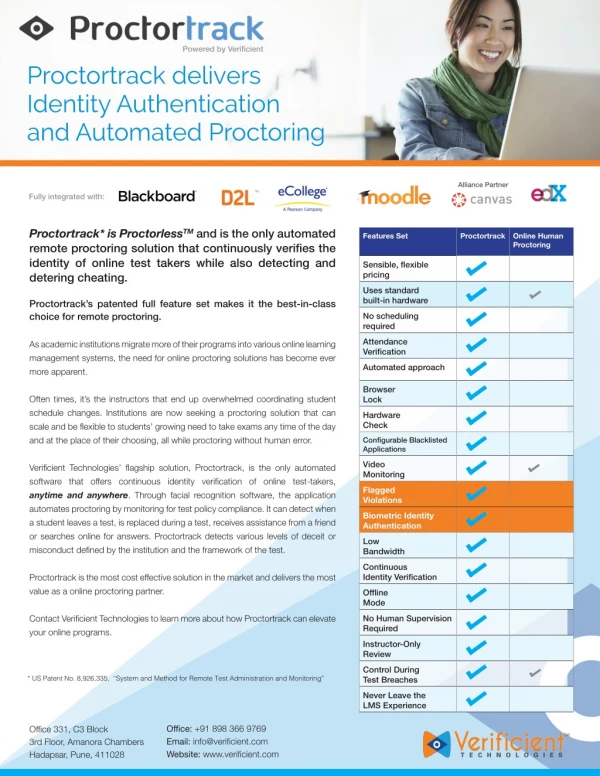
Safeguarding the Sanctity of Digital Exams: A Strategic Guide to Online Proctoring Executive Summary The transition to digital learning environments has brought about a fundamental challenge: maintaining the integrity and credibility of assessments outside the traditional classroom. This summary delves into the technological architecture and strategic importance of the online proctoring system. We examine how AI-driven monitoring, biometric verification, and lockdown technologies work in tandem to create a "virtual classroom" where fairness is prioritized and misconduct is deterred. 1. The Necessity of Remote Invigilation As institutions expand their reach globally, the demand for flexible, high-stakes testing has skyrocketed. However, flexibility cannot come at the cost of academic standards. Without a robust mechanism to oversee the examination process, the value of degrees and professional certifications would inevitably diminish. The primary role of a modern system is to replicate—and in many cases, exceed—the level of oversight found in a physical exam hall. By utilizing a combination of human expertise and machine precision, these systems ensure that every candidate is evaluated on a level playing field, regardless of their physical location. 2. The Integrated Ecosystem: Online Assessment and Beyond A proctoring solution does not exist in a vacuum; it is a critical component of a broader Online Assessment ecosystem. For a digital exam to be successful, the proctoring layer must be seamlessly integrated with the assessment platform to ensure that security measures do not interfere with the student’s performance or the system’s stability. When these two systems communicate effectively, administrators can automate the entire lifecycle: from student authentication and environment scanning to real-time behavioral flagging and post-exam forensic reporting. 3. Core Technologies Powering Modern Proctoring
Modern proctoring has moved far beyond simple webcam monitoring. It now involves a sophisticated "multi-modal" approach to security: A. AI-Driven Behavioral Analysis Artificial Intelligence acts as the first line of defense. AI algorithms are trained to detect specific anomalies that suggest academic dishonesty, such as: Eye-Tracking: Monitoring if a student is frequently looking off-screen at notes or a second device. Audio Detection: Flagging suspicious background noises or whispers that could indicate external assistance. Head Movement Analysis: Identifying if the candidate is moving out of the camera's view or interacting with another person. B. Biometric Authentication To prevent "impersonation fraud," systems use facial recognition and ID verification. Before the exam begins, the candidate must present a government-issued ID to the camera, which the system compares against the live video feed and the institution's records. C. Secure Browser Lockdown A key feature of any professional system is the ability to "lock down" the testing device. This prevents the candidate from: Opening new tabs or search engines. Using copy-paste functions. Accessing local files or prohibited software (like Discord or ChatGPT). Using screen-sharing or secondary monitors. 4. Different Models of Online Proctoring Depending on the stakes and the budget, institutions typically choose from three main proctoring models: 1. Live Proctoring: A human invigilator monitors the student in real-time via a webcam. This is the most interactive method, allowing for immediate intervention if a student violates a rule. 2. Recorded Proctoring: The entire session is recorded (screen, audio, and video). After the exam, a human reviewer watches the footage at high speed, focusing on segments flagged by AI as "high risk." 3. Fully Automated Proctoring: The system uses AI to monitor the student and provide a "credibility score." If the score falls below a certain threshold, the result is sent to the instructor for a final manual check. 5. Enhancing the Candidate Experience One common misconception is that proctoring is purely "punitive." On the contrary, a well- designed online proctoring system actually improves the student experience by: Reducing Test Anxiety: Knowing that the system is fair and that others cannot cheat provides a sense of security to honest students. Providing Flexibility: Students can take exams at any time (24/7) from the comfort of their homes, eliminating the stress and cost of travel.
Immediate Troubleshooting: Many systems include a live chat feature where students can get technical help if their internet flickers or their camera disconnects. 6. Data Privacy and Ethical Considerations In an era of increasing data regulation (such as GDPR), the ethical handling of student data is paramount. Leading proctoring providers prioritize: Data Encryption: All video and audio recordings must be encrypted both during transmission and while at rest. Consent-Based Monitoring: Students must be clearly informed about what data is being collected and for what purpose. Bias Mitigation: Ensuring that AI algorithms are tested for diversity to avoid false flags based on a student’s skin tone or facial structure. 7. The ROI of Digital Invigilation For educational institutions and corporations, the return on investment is clear. Transitioning to a digital-first proctoring model results in: Scalability: The ability to examine 10,000 students simultaneously without hiring 500 physical proctors. Operational Savings: Eliminating the need for large testing centers, physical paper logistics, and security transport for exam sheets. Rapid Results: Integration with automated grading allows for faster certification cycles, which is critical in corporate training. 8. Conclusion: The Future of Trust in Education The future of global education depends on our ability to verify knowledge accurately and securely. As AI continues to evolve, the online proctoring system will become even more discrete and efficient, moving toward "ambient invigilation" where the technology supports the student rather than just watching them. By investing in a high-quality Online Assessment framework, institutions are not just buying software; they are building a foundation of trust that protects their reputation and the hard work of their students. The digital transformation of exams is no longer a trend—it is a standard that defines the modern era of learning.