Download
1 / 2
20 likes | 31 Views
Screen printing is a popular and versatile method that has been used for decades to create beautiful and unique designs on various materials. Whether you're an aspiring artist, small business owner, or just looking for a fun new hobby, screen printing is an excellent choice. This beginner's guide will take a closer look at the different screen printing techniques and methods available.<br>

E N D
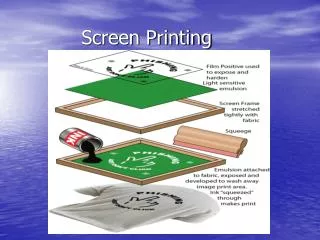
Screen Printing Techniques And Methods: A Beginner's Guide Screen printing is a popular and versatile method that has been used for decades to create beautiful and unique designs on various materials. Whether you're an aspiring artist, small business owner, or just looking for a fun new hobby, screen printing is an excellent choice. This beginner's guide will take a closer look at the different screen printing techniques and methods available. 1. Stencil Method: This is the most common screen printing method and involves creating a stencil (or "screen") using a light-sensitive emulsion and a frame. Ink is pressed through the stencil onto the material, creating the desired design. 2. Direct Method: In the direct method, the design is painted directly onto the screen using special inks without using a stencil. This method is great for printing large, solid areas of color but can be more difficult to control for fine details. 3. Discharge Method: This method involves printing with a special discharge ink that removes the dye from the material rather than adding color. This method is particularly useful for printing on dark materials, as it allows the natural color of the material to show through. 4. Foil Method: The foil method involves applying a special adhesive to the material, followed by a metallic foil layer. The foil is then pressed onto the adhesive using a heat press, creating a bright and eye-catching metallic design. 5. Emulsion Method: This method involves coating the screen with a light-sensitive emulsion, which is then exposed to light. The emulsion hardens where it is exposed, creating a stencil that can be used to print. This method is particularly useful for creating fine details and crisp lines. No matter which screen printing method you choose, it's important to have the right equipment and supplies. This includes a screen printing press, ink, emulsion, frames, and a range of towelling dressing gown materials to print on. But, with practice and experimentation, you'll soon be able to create beautiful and unique designs easily. In conclusion, screen printing is an exciting and creative method that offers many possibilities. Whether you're a beginner or an experienced artist, there's a screen printing technique for you. So why not give it a try and see what you can create! FAQs:
Q: Is screen printing suitable for small quantities? A: Screen printing can be used for small and large quantities, but it is most cost-effective for larger runs. The setup costs for screen printing can be high, but the cost per item decreases as the quantity increases. Q: Can screen printing be used for complex designs? A: Yes, screen printing can be used for complex designs, but it may require multiple stencils or special techniques like using halftones. It is also important to remember that screen printing best suits designs with bold, simple lines rather than fine details.