High-risk environments operate under constant pressure to prevent security breaches while maintaining uninterrupted operations. Locations such as military installations, government buildings, airports, border checkpoints, nuclear facilities, data centers, and critical infrastructure sites face persistent threats from sabotage, smuggling, and unauthorized access. Among all security vulnerabilities, vehicle entry points remain one of the most challenging to secure effectively.
As threat tactics grow more sophisticated, traditional vehicle inspection methods struggle to keep pace. This is where advanced under-vehicle surveillance technology becomes indispensable, offering enhanced visibility, automation, and intelligence-driven monitoring that manual processes cannot achieve.
Understanding the Security Risks of Vehicle Access
Vehicles present a unique challenge in high-risk environments. They can conceal explosives, weapons, contraband, surveillance devices, or structural modifications designed to bypass routine checks. Unlike personnel screening, vehicle inspections require detailed examination of hard-to-see areas, especially the undercarriage.
Manual inspection methods such as mirrors or handheld cameras are often limited by:
- Incomplete visual coverage
- Time constraints at busy checkpoints
- Dependence on human vigilance
- Lack of historical inspection records
These limitations increase the likelihood of threats slipping through undetected, particularly in environments where speed and security must coexist.
Why Traditional Inspection Methods Are No Longer Sufficient
While manual vehicle inspection techniques may still be used in low-risk areas, they are inadequate for facilities facing modern security threats. High-risk environments require consistent, repeatable, and accurate screening that is not affected by fatigue or environmental conditions.
Traditional approaches fail to deliver:
- Consistent Inspection Quality : Human judgment varies between personnel and shifts.
- Scalability : Increased vehicle volume overwhelms manual screening processes.
- Digital Evidence: There is no reliable way to track vehicle history or compare past inspections.
- Rapid Response : Threat detection often depends on visual recognition rather than data-driven alerts.
These shortcomings highlight the need for automated and intelligent inspection solutions.
The Role of Advanced Under-Vehicle Surveillance Technology
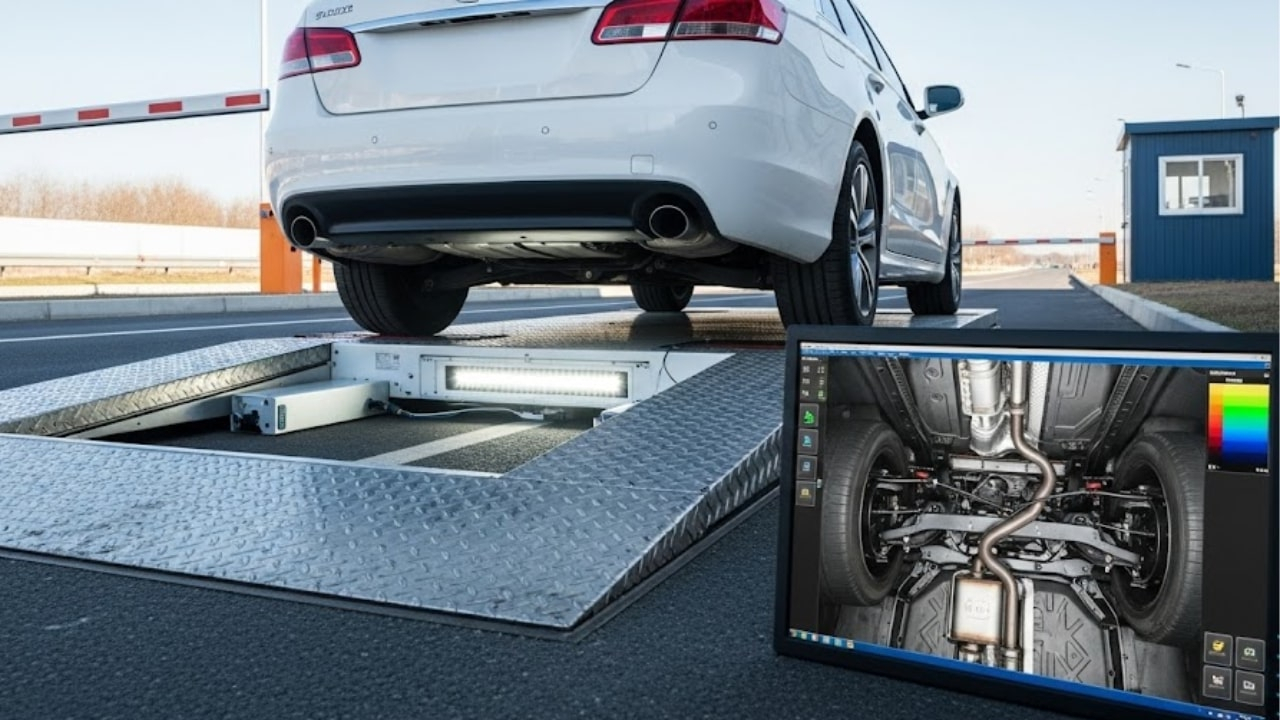
Advanced under-vehicle surveillance systems employ high-resolution imaging, automated scanning, and intelligent software to capture and analyze detailed images of a vehicle’s underside in real time. Vehicles pass over scanning platforms without stopping, allowing continuous traffic flow while maintaining strict security checks.
These systems typically offer:
- Full-length undercarriage coverage
- Shadow-free illumination
- High-speed image capture
- Automated anomaly detection
- Secure data storage for audits and investigations
By removing guesswork and improving visibility, these technologies ensure every vehicle is inspected with the same level of precision.
How UVSS Enhances Security in High-Risk Environments
Incorporating UVSS into perimeter security architecture significantly strengthens threat detection capabilities. These systems act as a first line of defense, identifying concealed risks before vehicles reach sensitive areas.
Key security benefits include:
- Early Detection of Hidden Threats : Explosives, weapons, or unauthorized devices can be identified before entry.
- Reduced Insider Threat Risk : Changes to authorized vehicles are detected through comparative analysis.
- Deterrence : Visible automated inspection discourages malicious intent.
- Real-Time Alerts : Security teams can respond immediately to anomalies.
This proactive approach minimizes the risk of security incidents while supporting rapid decision-making.
Operational Efficiency Without Security Compromise
High-risk facilities often process large volumes of vehicles daily. Advanced surveillance solutions are designed to operate without disrupting traffic flow, ensuring security does not become an operational bottleneck.
Advantages include:
- Faster vehicle throughput
- Reduced queue congestion
- Lower manpower dependency
- Continuous 24/7 operation
This balance of speed and security is essential in environments where delays can impact mission-critical operations.
Data Intelligence and Long-Term Security Value
Beyond real-time monitoring, advanced systems generate valuable data that enhances long-term security planning. Stored inspection records allow security teams to analyze trends, investigate incidents, and improve access control strategies.
Digital archives support:
- Compliance and audit requirements
- Incident forensics
- Pattern recognition
- Predictive risk assessment
This data-driven approach transforms vehicle screening into a strategic security asset rather than a reactive measure.
Conclusion
High-risk environments cannot afford vulnerabilities at vehicle entry points. As threats evolve and operational demands increase, relying on outdated manual inspection methods exposes organizations to unacceptable risks. Advanced under-vehicle surveillance solutions provide the visibility, accuracy, and intelligence required to secure sensitive facilities effectively.
By combining automation, high-resolution imaging, and real-time analytics, these systems deliver robust protection without compromising efficiency. For organizations responsible for safeguarding critical assets, personnel, and infrastructure, investing in advanced vehicle surveillance technology is no longer optional—it is essential.