Download
1 / 6
0 likes | 0 Views
Children learn best when they feel supported and encouraged at their own pace. ABA Therapy in Mississauga helps children build essential everyday skills through structured, personalized care. At Bright Steps, our experienced team supports your childu2019s unique developmentu2014book an appointment today to learn how we can help.

E N D
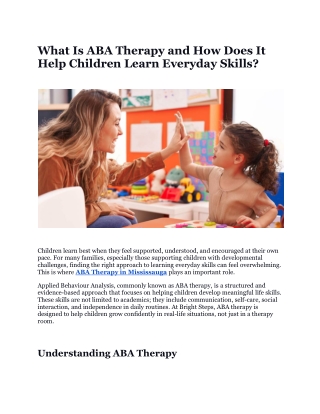
What Is ABA Therapy and How Does It Help Children Learn Everyday Skills? Children learn best when they feel supported, understood, and encouraged at their own pace. For many families, especially those supporting children with developmental challenges, finding the right approach to learning everyday skills can feel overwhelming. This is where ABA Therapy in Mississauga plays an important role. Applied Behaviour Analysis, commonly known as ABA therapy, is a structured and evidence-based approach that focuses on helping children develop meaningful life skills. These skills are not limited to academics; they include communication, self-care, social interaction, and independence in daily routines. At Bright Steps, ABA therapy is designed to help children grow confidently in real-life situations, not just in a therapy room. Understanding ABA Therapy
ABA therapy is a science-based approach that studies how behaviour works and how learning happens. The main goal is to encourage positive behaviours while reducing behaviours that may interfere with learning or daily life. Unlike one-size-fits-all programs, ABA therapy is highly individualized. Each child’s strengths, challenges, and learning style are carefully assessed before creating a personalized plan. This is why families looking for ABA Therapy in Mississauga often choose providers that focus on customized care rather than generic programs. How ABA Therapy Supports Everyday Skill Development Everyday skills are the foundation of independence. ABA therapy focuses on breaking these skills into smaller, manageable steps so children can learn them gradually and confidently. 1. Communication Skills Many children struggle to express their needs, emotions, or preferences. ABA therapy helps improve: Verbal communication Non-verbal cues like gestures or eye contact Understanding instructions and responding appropriately By reinforcing positive communication, children become more confident in expressing themselves at home, school, and in social settings. 2. Social Interaction and Play Skills Social situations can be challenging for some children. ABA therapy teaches: Turn-taking and sharing Initiating conversations Understanding social rules and boundaries Through guided practice, children learn how to interact naturally with peers and adults, making friendships and group activities more accessible.
3. Daily Living and Self-Care Skills Everyday routines such as brushing teeth, getting dressed, or eating independently are essential life skills. ABA therapy supports these areas by: Teaching step-by-step routines Using positive reinforcement to encourage consistency Helping children gain confidence in self-care tasks Families seeking ABA Therapy in Mississauga often notice improvements in daily routines that reduce stress at home. 4. Emotional Regulation and Behaviour Management Children may experience frustration, anxiety, or difficulty managing emotions. ABA therapy helps children: Recognize emotions Learn coping strategies Replace challenging behaviours with positive alternatives This approach supports emotional growth while creating a calmer, more predictable learning environment. Why ABA Therapy Is Effective ABA therapy is backed by decades of research and is widely recognized for its effectiveness. What makes it successful is its focus on: Consistency Positive reinforcement Measurable progress Rather than focusing on limitations, ABA therapy builds on a child’s abilities. Providers of ABA Therapy in Mississauga, such as Bright Steps, regularly monitor progress and adjust strategies to ensure continuous improvement. The Role of Parents and Caregivers
Parental involvement is a key part of successful ABA therapy. Therapists often work closely with families to: Teach strategies that can be used at home Maintain consistency across environments Support long-term skill development When parents understand the techniques used in therapy, children benefit from a more supportive and predictable learning experience. ABA Therapy in Real-Life Settings One of the most significant advantages of ABA therapy is its flexibility. Therapy sessions can take place: At home In clinics In community settings At school (when appropriate) This real-world approach helps children apply their skills naturally, making learning more meaningful and lasting. Choosing the Right ABA Therapy Provider When looking for ABA Therapy in Mississauga, it’s essential to choose a provider that values: Individualized treatment plans Qualified and experienced therapists Family collaboration Ethical and compassionate care Bright Steps focuses on creating a supportive environment where children feel encouraged, respected, and motivated to learn. Long-Term Benefits of ABA Therapy ABA therapy is not just about short-term improvements. Over time, children often develop:
Greater independence Stronger communication skills Improved confidence Better social relationships These skills support long-term success in school, family life, and the community. Final Thoughts Every child learns differently, and there is no single path to growth. ABA therapy offers a structured yet flexible approach that helps children build everyday skills at their own pace. With the proper guidance and support, children can develop the confidence they need to navigate daily life successfully. Families exploring ABA Therapy in Mississauga can feel reassured that evidence-based care, such as the programs offered at Bright Steps, focuses on meaningful progress and real-world independence. Frequently Asked Questions (FAQs) 1. What age is ABA therapy suitable for? ABA therapy supports children of various ages. Early intervention is effective, but older children can also build meaningful skills through structured programs. Book an appointment todayto learn how ABA therapy can support your child’s needs. 2. How long does it take to see results from ABA therapy? Progress varies for each child. Some improvements may be seen within weeks, while other skills develop gradually over time with consistent therapy. 3. Is ABA therapy only for communication challenges? No. ABA therapy supports a wide range of skills, including social interaction, daily living tasks, emotional regulation, and behaviour management. 4. Can parents be involved in ABA therapy sessions? Yes. Parent involvement is encouraged and helps reinforce learning outside of therapy sessions. 5. How is progress measured in ABA therapy?
Therapists use data-driven methods to track progress and adjust strategies based on the child’s development and response to therapy.