Download
1 / 13
0 likes | 39 Views
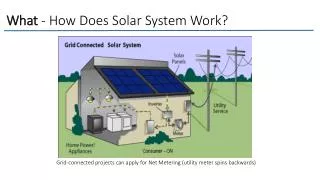
A solar panel works by converting sunlight into electricity. It contains photovoltaic (PV) cells made from semiconductor materials, usually silicon. When sunlight hits these cells, it knocks electrons loose, creating an electric current. This direct current (DC) is then converted into alternating current (AC) by an inverter, making the electricity usable for homes and businesses. Solar panels generate clean, renewable energy, reducing reliance on fossil fuels.

E N D
How Does a Solar Panel Work Gcsolarelectric Visit Our Website www.gcsolarelectric.com
Our Company Solar energy is one of the most sustainable and eco- friendly sources of power available today. With increasing concerns about climate change and the need for renewable energy, solar panels have become a popular choice for homeowners and businesses alike. But how does a solar panel work? This article will break down the science behind solar energy in simple terms, helping you understand how sunlight is transformed into electricity that powers our lives.
What is a Solar Panel? A solar panel is a device that converts sunlight into electricity. It’s made up of several components, the most important being the photovoltaic (PV) cells, which are responsible for the energy conversion process. Here’s a quick overview of the main components:
Component Function Photovoltaic Cells: Convert sunlight into electricity using the photovoltaic effect. Inverter: Converts direct current (DC) from the solar panels to alternating current (AC) for household use. Mounting System: Holds the solar panels in place, usually on rooftops or open land. There are different types of solar panels, including monocrystalline, polycrystalline, and thin-film. Each type has its advantages, but they all work on the same basic principle of converting sunlight into electricity.
How Does a Solar Panel Work? So, how does a solar panel work? At its core, a solar panel works by converting sunlight into electricity through a process called the photovoltaic effect. This effect allows the solar cells within the panel to absorb sunlight and create an electric current. The electricity generated is then converted into a form that can power your home or business.
The Core of Solar Panel Operation The Photovoltaic Effect: The photovoltaic effect is the key to understanding how a solar panel works. When sunlight hits the solar cells, it knocks electrons loose from their atoms. This creates an electric current, which is captured by the wiring in the solar panel. Photovoltaic cells are made from semiconductors, usually silicon, which are specially treated to create an electric field. This field forces the freed electrons to move in a particular direction, generating a flow of electricity. This process is the foundation of how solar panels produce power.
Detailed Steps of How a Solar Panel Works Step 1: Absorption of Sunlight by Photovoltaic Cells When sunlight strikes a solar panel, the photovoltaic cells absorb the photons (particles of light). The more sunlight a panel absorbs, the more electricity it can produce. Factors like the angle of the panel and the amount of sunlight available will influence how much energy is generated. Step 2: Generation of Electric Current As the photons are absorbed, they energize the electrons in the semiconductor material (usually silicon). This energy causes the electrons to move, creating an electric current. This current is direct current (DC), meaning it flows in one direction.
Detailed Steps of How a Solar Panel Works Step 3: Conversion of DC to AC Electricity Most of our household appliances and the power grid use alternating current (AC), so the DC electricity generated by the solar panel must be converted. This is where the inverter comes in. The inverter changes the DC into AC, making it compatible with the electrical systems in our homes. Step 4: Distribution of Electricity The converted electricity can now be used to power your home. Any excess electricity can be sent back to the grid, depending on your setup, and you may receive credits on your electricity bill through a process called net metering.
Key Components That Make Solar Panels Work Photovoltaic Cells Lorem ipsum dolor sit amet, consectetur adipiscing elit. In ultricies, justo eu ullamcorper dignissim, mauris mi efficitur nibh, sit amet faucibus erat urna sed magna. Morbi hendrerit arcu vel arcu feugiat, ut mollis sapien viverra. Type of Solar cell characteristics Monocrystalline: Made from a single crystal of silicon, highly efficient. Polycrystalline: Made from multiple silicon crystals, slightly less efficient but more affordable. Thin film: Made from various materials, flexible, and less efficient but lightweight and versatile.
Inverter The inverter is a crucial part of the solar panel system. It converts the DC electricity produced by the photovoltaic cells into AC electricity, which is what powers most homes and businesses. There are different types of inverters: String Inverters: These are the most common and connect multiple panels in a series. Microinverters: These are smaller and attach to individual panels, improving efficiency but at a higher cost. Power Optimizers: These work with string inverters to maximize the performance of each panel.
Conclusion In summary, solar panels are a powerful technology that converts sunlight into usable electricity through the photovoltaic effect. They consist of photovoltaic cells, an inverter, and a mounting system, all working together to produce clean, renewable energy. By understanding how a solar panel works, you can make informed decisions about using this technology to reduce your carbon footprint and save on energy costs.
Contact Us We would love to hear from you. Feel free to reach out using the below details. (305)-917-9282 www.gcsolarelectric.com info@gcsolarandelectric.com 13th Street. 47 W 13th St, NY 10011, USA.
Gcsolarelectric Thank You For Your Attention Visit Our Website www.gcsolarelectric.com