Download

1 / 5
0 likes | 3 Views
Seamless Steel Pipe Strength, Versatility, and Industrial Importance

E N D
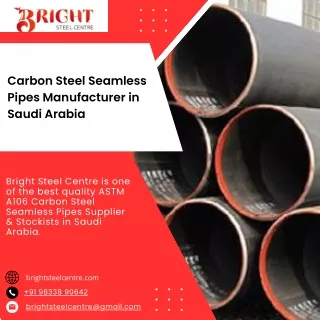
Seamless Steel Pipe: Strength, Versatility, and Industrial Importance Seamless steel pipe is a type of pipe made from a solid cylindrical piece of steel called a billet, which is heated and then pierced to create a hollow tube. Unlike welded pipes, which are made by rolling and welding steel plates, seamless steel pipes have no seams or joints. This characteristic offers superior strength, uniformity, and resistance to pressure and corrosion, making them indispensable across numerous industries. What is a Seamless Steel Pipe? A seamless steel pipe is exactly what its name implies: a pipe without any seams. It is manufactured through a process that involves solid steel billets being heated and then molded into a hollow cylinder without the need for welding. The result is a high-strength, durable pipe with uniform structure and excellent mechanical properties.
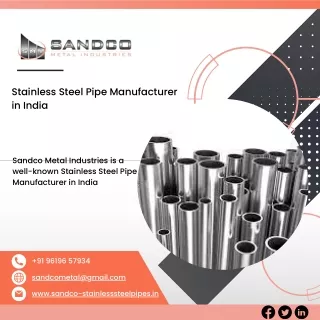
The seamless structure eliminates the weak points found in welded pipes, especially where the weld line runs. This makes seamless pipes suitable for high- pressure applications, critical structural functions, and high-performance uses. How is Seamless Steel Pipe Made? The manufacturing process of seamless steel pipes is more complex than that of welded pipes. It typically involves the following steps: 1.Billet Selection– High-quality steel billets are selected for their chemical composition and mechanical properties. 2.Heating– The billet is heated in a furnace to a temperature where it becomes malleable. 3.Piercing– The hot billet is pierced through the center using a mandrel or piercing tool, forming a hollow tube. 4.Rolling and Stretching– The tube is then elongated and reduced in thickness through rolling mills to achieve the desired diameter and wall thickness. 5.Cooling and Finishing– The pipe is cooled, straightened, cut to required lengths, and subjected to various finishing processes like heat treatment, inspection, and testing. Types of Seamless Steel Pipes There are various types of seamless steel pipes based on their composition and application: 1.Carbon Steel Seamless Pipes– Made from carbon steel and used in general industrial applications. 2.Alloy Steel Seamless Pipes– Contain additional alloying elements like chromium, nickel, or molybdenum for enhanced performance in high- temperature or corrosive environments. 3.Stainless Steel Seamless Pipes– Offer excellent corrosion resistance, making them ideal for chemical, food, and pharmaceutical industries. 4.High-Pressure Boiler Tubes– Special seamless pipes designed to withstand extreme pressures and temperatures in boilers and power plants. 5.Line Pipes– Used for transporting oil, gas, and water in energy and utility sectors. Applications of Seamless Steel Pipes
Seamless steel pipes are used across a wide variety of industries due to their robustness, durability, and performance under pressure. Some key applications include: Oil and Gas Industry: For drilling, transportation of crude oil and natural gas, and offshore operations. Petrochemical and Chemical Plants: Where high-temperature and corrosion-resistant pipes are needed. Power Plants: For boiler tubes, superheater tubes, and heat exchangers. Automotive Industry: For components like fuel lines and engine parts that require precision and strength. Construction and Infrastructure: In structural applications like scaffolding, foundations, and heavy-duty frames. Shipbuilding and Marine Applications: Due to the pipe’s ability to withstand high-pressure and saline environments. Advantages of Seamless Steel Pipe 1.Superior Strength: Seamless steel pipes are inherently stronger than welded pipes because they have no joints or seams. This allows them to withstand higher pressures and stress. 2.Uniformity: The absence of welds ensures uniform strength and mechanical performance along the entire length of the pipe. 3.Better Resistance to Corrosion and Pressure: With no welding seam, the pipe offers higher resistance to internal and external pressure and is less susceptible to corrosion at joints. 4.Improved Reliability: Seamless pipes are preferred for critical applications where any pipe failure could lead to serious safety issues. 5.Wide Range of Applications: Due to their strength and durability, they can be used in numerous sectors from industrial machinery to energy and transport. Disadvantages and Limitations While seamless steel pipes offer many benefits, they also have some drawbacks: Higher Cost: Seamless pipes are more expensive to produce than welded pipes due to the complexity of the manufacturing process and the raw material quality. Longer Lead Time: Manufacturing seamless pipes takes longer, which can lead to longer wait times for delivery.
Limited Diameter Availability: It is more difficult and costly to produce seamless pipes with very large diameters compared to welded ones. Quality Control and Testing To ensure performance and safety, seamless steel pipes undergo strict quality checks and tests, including: Hydrostatic Testing: To check for leaks or weaknesses under pressure. Ultrasonic Testing: For detecting internal and external defects. Tensile and Hardness Testing: To measure strength and ductility. Chemical Analysis: To ensure the correct composition of alloying elements. International standards like ASTM (American Society for Testing and Materials), API (American Petroleum Institute), and ISO (International Organization for Standardization) govern the manufacturing, testing, and application of seamless steel pipes. Future of Seamless Steel Pipes As industries push for higher efficiency, sustainability, and safety, the demand for seamless steel pipes is expected to grow. Advancements in steel manufacturing technology, automation, and precision engineering will likely improve the quality and availability of these pipes, making them even more indispensable in high- stakes industrial settings. In particular, emerging markets and infrastructure development in developing countries are likely to drive the global growth of seamless pipe consumption. Visit our website https://www.tszxglobal.com/ for more details. Conclusion Seamless steel pipes are an essential component in modern industry, offering unmatched strength, reliability, and versatility. Their seamless structure provides numerous advantages over welded pipes, particularly in applications that demand durability under pressure and extreme conditions. While they may come at a higher cost, the performance benefits and long-term reliability make them a worthwhile investment in sectors such as oil and gas, power generation, construction, and automotive.