Download

1 / 8
0 likes | 10 Views
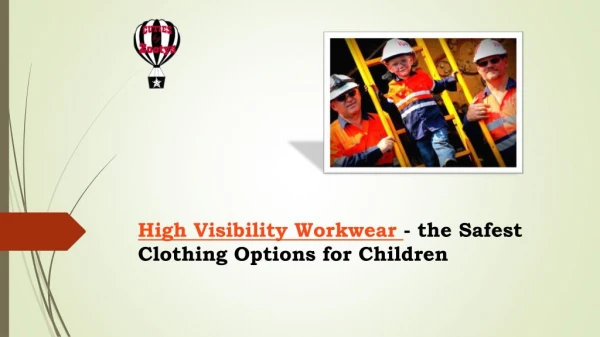
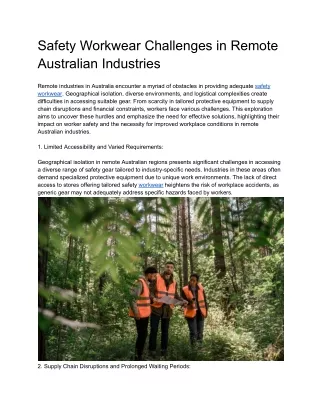
Safety is paramount in the fast-paced world of road traffic management, especially in countries like Australia where weather conditions and work environments can be unpredictable. For road traffic workers, ensuring drivers and machinery operators see them is crucial to their safety. One of the most effective ways to achieve this is through hi-vis workwear. Whether on highways, in construction zones or during nighttime repairs, wearing the right clothing can mean the difference between life and death.<br>

E N D
Why High-Visibility Workwear is Essential for the Safety of Australian Road Traffic Workers Safety is paramount in the fast-paced world of road traffic management, especially in countries like Australia where weather conditions and work environments can be unpredictable. For road traffic workers, ensuring drivers and machinery operators see them is crucial to their safety. One of the most effective ways to achieve this is through hi-vis workwear. Whether on highways, in construction zones or during nighttime repairs, wearing the right clothing can mean the difference between life and death. Hi-vis workwear isn't just about bright colors; it’s a protective measure designed to increase visibility in various working conditions. In this article, we'll explore the importance of hi-vis workwear for road traffic workers in Australia, how it's designed to withstand harsh weather, and why it's critical for workplace safety. We'll also dive into the different types of hi-vis clothing available, including waterproof hi vis workwear, and offer tips on choosing the best options for Australian road traffic workers.
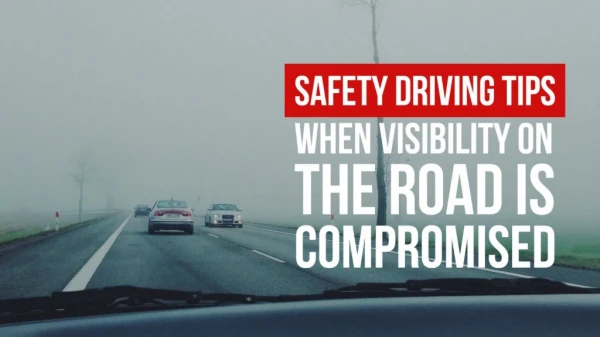
The Role of Hi Vis Workwear in Australian Road Traffic Safety Australia’s extensive road networks and large-scale infrastructure projects require a workforce that operates in potentially dangerous environments. For road traffic workers, visibility is essential to avoid accidents with passing vehicles and heavy machinery. Hi-vis workwear is a key component of their protective equipment (PPE), designed to make them stand out in any environment—whether it's during the day, at night, or in low-light conditions like fog or rain. But why is visibility so important? The answer lies in reaction time. Drivers need enough time to notice road workers, slow down, and avoid potential collisions. Studies show that wearing high-visibility clothes can reduce the risk of accidents by as much as 50% in high-risk environments, where workers are exposed to moving vehicles. This level of protection becomes even more vital when you consider Australia's varied and often extreme weather conditions. From the blinding sun of the outback to the heavy rains of coastal regions, road traffic workers must be visible regardless of the weather. This is where waterproof hi-vis workwear plays a critical role, allowing workers to remain dry, comfortable, and safe even during rainstorms.
Types of Hi Vis Workwear for Road Traffic Workers When choosing hi-vis workwear for road traffic workers, it’s important to consider the environment in which the clothing will be worn. Australia's diverse climate means that road workers may face intense heat, cold, rain, or even snow, depending on their location. As a result, hi-vis clothing comes in a variety of styles and materials designed to withstand specific conditions. Hi-Vis Vests Hi-vis vests are perhaps the most recognizable type of high-visibility clothes. Lightweight and easy to put on over regular clothing, vests are ideal for warmer climates or for workers who only need temporary visibility enhancements. Most hi-vis vests feature reflective strips and are available in fluorescent colors, ensuring high visibility in all environments. Hi-Vis Jackets For workers in cooler climates or during winter months, hi-vis jackets are an excellent option. These jackets not only increase visibility but also provide insulation and protection from the
elements. Some waterproof hi-vis workwear jackets are designed to keep workers dry during heavy rains, making them ideal for road traffic workers who must remain outdoors regardless of weather conditions. Hi-Vis Pants Often overlooked, hi-vis pants are another important part of a road worker's wardrobe. They offer additional visibility, especially in low-light conditions when workers might be crouched or kneeling. Like jackets, these pants can be waterproof and insulated for protection against harsh weather. Hi-Vis Overalls Overalls provide full-body coverage, combining the benefits of a jacket and pants in one. These are particularly useful for road traffic workers who need protection from dirt, grease, and hazardous materials while maintaining high visibility. How Weather Affects Visibility and Hi-Vis Performance Australia's weather can be unpredictable, and it plays a significant role in the effectiveness of high-visibility clothes. For example, bright sunny days can create glare, making it harder for drivers to spot workers unless they’re wearing highly reflective clothing. On the other hand, overcast or rainy conditions reduce visibility, which is why waterproof hi-vis workwear with reflective strips is essential.
During rain or fog, retroreflective materials on hi-vis clothing become particularly important. These strips reflect light back toward its source, such as car headlights, allowing workers to be seen from a distance even in poor visibility. Waterproof materials also ensure that the workwear remains functional in wet conditions, preventing it from becoming heavy or uncomfortable. In regions prone to extreme heat, workers may need breathable hi-vis workwear to prevent overheating while still maintaining safety standards. Lightweight materials and moisture-wicking technology help keep workers cool and comfortable. The Economics of Hi Vis Workwear: Cost vs. Safety Investing in quality hi-vis workwear is more than just a legal requirement—it’s a smart economic decision. While it may be tempting for employers to cut corners with cheaper options, the cost of accidents due to inadequate safety measures far outweighs the savings. For road traffic workers, even minor accidents can lead to significant downtime, medical expenses, and potential legal liabilities. High-quality waterproof high-visibility clothes not only protect workers but also last longer, meaning fewer replacements and lower long-term costs. When road traffic workers feel safe and comfortable, they’re more productive, reducing delays and improving overall efficiency on projects. Choosing the Right Hi Vis Workwear for Road Traffic Workers Selecting the right hi-vis workwear is critical for ensuring safety and comfort. It’s not a one-size-fits-all solution—different environments and tasks require specific types of clothing to maximize both visibility and functionality. When choosing the appropriate hi-vis clothing, several factors should be considered to ensure road traffic workers are adequately protected while remaining productive throughout their shifts. Below are key aspects that should guide the decision-making process: Daytime vs. Nighttime Visibility When choosing hi-vis clothing, it’s essential to account for whether workers will be on-site during the day, night, or both. Bright fluorescent colors such as neon yellow, orange, or lime green are ideal for daytime work because they stand out against natural backgrounds. However, these colors alone are not sufficient for nighttime visibility. For workers operating after dark, retroreflective materials are indispensable. Retroreflective strips on hi-vis clothing reflect artificial light—such as headlights—back toward the source, making the worker instantly more visible to oncoming drivers. Workwear in Australia standards recommend hi-vis workwear with large reflective patches around the torso, arms, and legs to ensure that road traffic workers are visible from all angles, whether they are standing, kneeling, or crouching.
Breathability and Comfort Long shifts on the road often involve hard physical labor, which can cause overheating and discomfort, especially in Australia’s warmer climates. Opting for breathable materials—such as polyester mesh or cotton-blend fabrics—can make a significant difference in worker comfort. These fabrics promote airflow and help regulate body temperature, reducing the risk of heat-related illnesses. Additionally, choosing hi-vis clothing with adjustable features like Velcro cuffs or adjustable waistbands can enhance comfort. Workers can customize the fit of their gear based on their body shape, ensuring they can move freely without the clothing being too tight or restrictive. This adaptability is particularly important for tasks that require lifting, bending, or climbing. Durability and Resistance to Wear and Tear Road traffic work is physically demanding, and workers often encounter harsh conditions that can take a toll on their gear. As such, durability is a key factor when selecting hi-vis workwear. Look for garments made from tough materials like heavy-duty polyester or nylon, which are resistant to abrasions, tears, and punctures. Double-stitched seams and reinforced knees or elbows are additional features that can prolong the life of the clothing, especially in high-stress areas. For workers handling chemicals, oils, or other hazardous substances, stain-resistant or chemical-resistant fabrics are recommended to prevent deterioration of the hi-vis clothing. Ensuring that workwear in Australia is easy to clean and maintain is another way to extend its longevity, reducing the need for frequent replacements and saving costs in the long run.
Layering for Versatility Road traffic workers often experience fluctuating weather conditions within a single shift, especially during transitional seasons. A layered approach to hi-vis workwear allows workers to add or remove clothing as needed to maintain comfort without compromising visibility. For example, workers might wear a lightweight, short-sleeved hi-vis shirt during the day but keep a hi-vis jacket on hand for cooler evening temperatures or sudden rain. Layering ensures that workers are always prepared for changes in weather while remaining compliant with safety standards. Hi-vis fleece jackets or thermal vests can be layered underneath waterproof outerwear for additional warmth without adding bulk. Customization for Specific Job Roles Different road traffic roles may require additional customization in hi-vis workwear. For example, traffic controllers who need to direct vehicles may benefit from hi-vis clothing with built-in LED lights to enhance visibility further, especially in low-light or high-traffic areas. Workers who handle a variety of tools and equipment could also benefit from hi-vis workwear with extra pockets or tool loops, allowing them to store necessary items within easy reach without sacrificing visibility. Some roles may require fire-retardant hi-vis workwear, particularly in environments where there’s a risk of sparks or open flames. Choosing workwear with these added safety features ensures workers are protected against specific hazards while still meeting the visibility requirements mandated by Australian safety standards.
Size and Fit for Maximum Coverage Ensuring that hi-vis workwear is the correct size is not just about comfort—it’s about safety. Clothing that is too large may get caught in machinery or obstruct movement, while garments that are too tight could restrict mobility and become uncomfortable over long periods. When selecting hi-vis gear, road traffic workers should aim for a snug yet comfortable fit that allows for a full range of motion. High-visibility clothing should also provide adequate coverage. This means ensuring that the reflective strips or fluorescent fabric extend across the arms, legs, and torso. Hi-vis overalls or full-body suits are often the best option for maximum coverage, especially for workers who frequently bend or kneel, ensuring that they remain visible from head to toe. Conclusion For Australian road traffic workers, hi-vis workwear is more than just a uniform—it’s a lifeline. In an environment where visibility is crucial, the right clothing can prevent accidents and save lives. From high-visibility clothes with reflective strips to waterproof hi-vis workwear, these garments are designed to meet the needs of workers operating in all conditions. Employers should prioritize providing high-quality, durable workwear that not only complies with safety regulations but also enhances the comfort and productivity of their workers. Ultimately, investing in the right hi-vis workwear is an investment in safety, efficiency, and peace of mind.