Download

1 / 14
0 likes | 2 Views
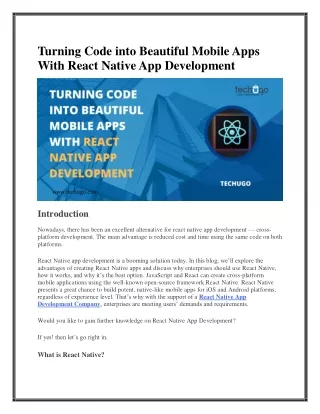
Choosing the right front-end framework is a critical decision for modern web development, and this detailed PDF by sureshdas provides a clear, practical comparison of React, Vue, and Svelte. The document explains how each framework approaches component architecture, state management, performance optimization, scalability, and developer experience. React is explored for its strong ecosystem, flexibility, and dominance in enterprise-grade applications. Vue is presented as a balanced framework known for its simplicity, progressive adoption, and ease of learning.

E N D
Top Front-End Frameworks Compared: React vs Vue vs Svelte – The Ultimate 2025 Guide by Sureshdas Introduction In the rapidly evolving world of modern web development, choosing the right front-end framework has become more critical than ever. As users demand lightning-fast performance, interactive UI, lightweight applications, and scalable architectures, developers must carefully select the technology that delivers the best combination of power and flexibility. In 2025, three frameworks continue to lead the market: React, Vue, and Svelte. This in-depth technical analysis—prepared for Sureshdas—explores every dimension of these frameworks, helping developers, organizations, and digital businesses make the right decision. For more learning resources and digital mastery, visit: Sureshdas: https://www.sureshdas.com/
Chapter 1: The Evolution of Front-End Frameworks The last decade has seen a dramatic transformation in how front-end applications are built. Starting from jQuery and DOM manipulation libraries to component-based architectures, frameworks now offer powerful tools that simplify complex UI development. ● React revolutionized the idea of component-based UI building. ● Vue brought simplicity and community-driven architecture. ● Svelte introduced compiler-driven optimizations that eliminated runtime overhead. As digital experiences become more AI-driven, dynamic, and visually rich, selecting the right front-end framework is not just a technical decision—it’s a strategic one that influences scalability, performance, SEO, team productivity, and long-term maintainability. Explore more digital transformation insights at: https://www.sureshdas.com/ Chapter 2: Introducing the Big Three – React, Vue, and Svelte React – The Industry Standard Created by Facebook (Meta), React remains the most widely used front-end library. With its virtual DOM, component architecture, and vast ecosystem, React powers platforms like Instagram, Airbnb, Netflix, and countless enterprise applications. Vue – The Progressive Framework Vue is known for its simplicity, ease of adoption, and clean architecture. Its intuitive API and lightweight nature have made it a favorite among startups and agile teams. Svelte – The New-Age Compiler Framework Svelte takes an innovative approach by shifting work from the browser to the build stage, producing highly optimized, minimal JavaScript bundles. This allows Svelte apps to load faster and perform better than many traditional frameworks.
Chapter 3: Architecture Comparison React Architecture ● Uses Virtual DOM ● JavaScript-first approach with JSX ● Heavy dependence on external libraries ● Extremely flexible but requires decisions on state management, routing, etc. Vue Architecture ● Template-first syntax ● Built-in state management through Vuex or Pinia ● Clear separation of concerns ● Highly structured and beginner-friendly Svelte Architecture ● No virtual DOM ● Compiler converts components into optimized vanilla JS ● Minimal runtime code ● Extremely performant by default Chapter 4: Performance Benchmarks Startup Performance ● Svelte is the fastest, thanks to its compile-time rendering. ● Vue’s template system makes it faster than React in small-to-medium apps.
● React performance varies depending on optimization techniques (memo, useCallback, lazy loading). Runtime Rendering ● React depends on reconciling Virtual DOM updates. ● Vue tracks reactivity more granularly. ● Svelte has no runtime cost, giving it an edge in resource-constrained environments. For detailed performance case studies, visit: https://www.sureshdas.com/ Chapter 5: Learning Curve and Developer Experience React Pros: ● Massive community ● Rich ecosystem ● Backed by Meta Cons: ● Requires JSX understanding ● Steep learning curve for beginners ● Many architectural decisions left to developers Vue Pros: ● Easiest to learn ● Clear documentation
● Intuitive HTML-based templates Cons: ● Smaller ecosystem compared to React Svelte Pros: ● Extremely beginner-friendly ● Minimal boilerplate ● Clean syntax Cons: ● Smaller community ● Less enterprise adoption Chapter 6: Ecosystem and Tooling React Ecosystem ● React Router ● Redux / Zustand / MobX / Recoil ● Next.js (for SSR and full-stack apps) React's ecosystem is the biggest and most diverse. Vue Ecosystem ● Vue Router ● Pinia / Vuex ● Nuxt.js Perfect for full-stack static and dynamic applications.
Svelte Ecosystem ● SvelteKit ● Tailwind-friendly UI culture Ideal for lightweight, high-performance web experiences. Chapter 7: Suitability for Project Types React is best for: ● Large enterprise-level applications ● Complex UIs ● High-traffic dynamic platforms ● Long-term scalability Vue is best for: ● Medium-sized projects ● Startups ● Team environments where speed matters ● Projects needing clean structure Svelte is best for: ● Highly interactive apps ● Performance-critical products ● Edge applications ● Low-resource devices (IoT, embedded web)
Chapter 8: SEO and SSR Capabilities React ● Next.js provides excellent SSR, ISR, and SEO optimization. ● React alone is not ideal for SEO-heavy apps without SSR tooling. Vue ● Nuxt 3 is powerful for SSR, static site generation, and hybrid rendering. Svelte ● SvelteKit delivers SSR-first architecture out of the box. ● SEO-friendly, fast, and great for marketing-driven websites. Chapter 9: Performance in Real-World Applications ● React dominates enterprise ecosystems thanks to tooling like Next.js. ● Vue shines in dashboards and SaaS products. ● Svelte is gaining popularity for mobile-first apps and AI interfaces. For more advanced development resources, visit: https://www.sureshdas.com/ Chapter 10: Community, Support, and Future Prospects in 2025 ● React: Strongest corporate backing, continuous innovation with Server Components. ● Vue: Huge growth in Asian and European markets. ● Svelte: Rapid adoption with SvelteKit 2.0 and enterprise onboarding.
Chapter 11: Final Comparison Table Chapter 13: Developer Productivity & Workflow Efficiency Developer productivity plays a major role in determining how quickly features can be delivered, bugs resolved, and updates deployed. Each framework brings its own workflow, structural philosophy, and set of tools that influence day-to-day development speed. React Productivity React's component-driven design provides flexibility but often requires developers to make additional decisions about state management, routing, structure, and patterns. While tools like Next.js, Create React App, and Vite streamline the startup process, large React applications can become complex due to the abundance of third-party packages. Senior developers enjoy this freedom, but beginners may feel overwhelmed. Vue Productivity Vue’s “batteries-already-included” approach makes it highly productive for both small and medium-scale projects. Clear coding patterns, optional TypeScript, powerful directives, and the single-file component (SFC) architecture significantly simplify feature development. Its documentation is often praised as one of the best, contributing to smooth onboarding and fast adoption.
Svelte Productivity Svelte stands out by reducing boilerplate code drastically. Common patterns, reactive variables, and scoped styles remove layers of complexity found in other frameworks. This results in shorter codebases and dramatically faster development cycles. Its compiler-first nature often eliminates the need for additional libraries, making it one of the most efficient frameworks for productivity-focused teams. Chapter 14: Enterprise Adoption & Business Readiness When evaluating front-end frameworks for enterprise projects, factors like long-term support, community size, job availability, and adoption rate are vital. React Adoption React dominates enterprise development. Fortune 500 companies rely on it due to Meta’s backing, robust ecosystem, and extensive hiring pool. React’s predictable lifecycle, adherence to declarative principles, and strong partners like Vercel ensure long-term stability and innovation. Vue Adoption Vue is popular among mid-size companies and fast-growing tech startups. While lacking a major corporate sponsor like React, its community support and adoption across Asian and European tech sectors continue to rise. Several enterprise-grade applications, including Alibaba properties, rely on Vue. Svelte Adoption Svelte is rapidly entering enterprise spaces, especially in performance-critical applications and dynamic SaaS dashboards. SvelteKit 2.0 has encouraged adoption among tech-forward companies, although its enterprise footprint remains smaller than React and Vue. Businesses looking for cutting-edge performance are increasingly giving Svelte serious consideration. Chapter 15: Mobile & Cross-Platform Development In a world where digital experiences span mobile, desktop, and web, choosing a framework that extends beyond browsers is essential. React for Mobile React Native is the dominant cross-platform mobile development SDK, enabling developers to write JavaScript and render native mobile UI. Its compatibility with React makes it easy to share business logic between web and mobile apps, contributing greatly to React’s ecosystem appeal.
Vue for Mobile Vue has NativeScript-Vue and Quasar Framework, which allow developers to build mobile apps, PWAs, and desktop apps. While less mature than React Native, these tools are powerful and continuously improving. Svelte for Mobile Svelte Native offers a lightweight alternative powered by NativeScript. Paired with SvelteKit, it enables fast mobile and PWA development with minimal JavaScript overhead. While not as popular as React Native, Svelte’s mobile tooling is rising in demand as businesses pursue speed-focused solutions. Chapter 16: Scalability & Large-Project Architecture Scalability is a core consideration when planning for applications expected to grow substantially over time. React Scaling Due to its modular ecosystem, React scales exceptionally well. With design patterns like Atomic Design, Redux for centralized state management, and Next.js for file-based routing, React supports multi-team, distributed architectures. Many global enterprise systems run successfully on React due to its structure and flexibility. Vue Scaling Vue’s opinionated nature and SFCs lend themselves well to scaling. Vuex/Pinia provides robust state management, while Nuxt offers an ideal platform for large multisite ecosystems. Vue’s consistency ensures that even large teams can collaborate efficiently. Svelte Scaling Svelte, while performant, is still evolving in the scalability domain. SvelteKit has improved structure by providing routing, universal rendering, and server integration. For ultra-large teams, organizational standards and patterns must be self-established due to a smaller ecosystem.
Chapter 17: Security Considerations Security remains a critical factor when choosing the right framework for enterprise applications. React Security React automatically protects applications against many cross-site scripting (XSS) attacks using its built-in escaping mechanisms. However, developers must handle external libraries with caution. Proper sanitation and validation remain essential. Vue Security Vue provides built-in XSS protection, template sanitization, and secure reactivity. Its configuration is generally safer for beginners, as Vue blocks dangerous expressions inside templates. Critical vulnerabilities are addressed quickly through community contributions. Svelte Security Svelte’s compile-time architecture drastically reduces runtime vulnerabilities. Its default escaping mechanisms are robust, but developers must remain cautious with dynamic HTML injection or third-party integrations. SvelteKit adds additional layers of production-ready security. Chapter 18: Community Support, Ecosystem Longevity & Future Direction The long-term viability of a framework depends on its community strength, documentation quality, and roadmap. React Community ● Largest global ecosystem ● Extensive library ecosystem ● Long-term corporate backing React is evolving toward server components, more efficient hydration, and deep integration with edge computing. Vue Community ● Developer-focused community ● Excellent documentation
● Strong adoption in Asian tech markets Vue continues modernizing with Vue 3 and Composition API improvements. Svelte Community ● Fast-growing and innovation-driven ● Strong backing for SvelteKit ● Favored by performance-focused teams Svelte aims to redefine the front-end landscape by merging reactive development with compile-time optimizations. Chapter 19: Framework Limitations & Challenges Understanding weaknesses helps developers set realistic expectations. React Challenges ● Requires decisions on libraries ● More boilerplate ● Can become complex for beginners Vue Challenges ● Smaller job market than React ● Risks fragmentation from multiple architectural patterns Svelte Challenges ● Smaller ecosystem ● Lower enterprise adoption ● Fewer ready-made solutions compared to React/Vue
Chapter 20: Migration Strategies (React ⇄ Vue ⇄ Svelte) As businesses evolve, they may need to migrate applications between frameworks. React to Vue This is straightforward due to similar component concepts, but JSX → template conversion requires careful handling. Vue to React More complex because JSX is imperative while Vue templates are declarative. However, shared logic can be ported with minimal changes. React/Vue to Svelte Svelte’s syntax is simpler, but the rewrite process is manual. Porting is easiest when the business separates function logic from UI layers. Chapter 21: Final Strategic Recommendations for 2025 Choosing the right framework depends on business strategy, team structure, and long-term roadmap. Choose React if: ● You’re building enterprise-grade applications ● You need massive community support ● You plan to integrate mobile apps using React Native Choose Vue if: ● You want fast development with minimal complexity ● Your team values simplicity and structured code ● You’re building dashboards, SaaS products, or scalable mid-size apps
Choose Svelte if: ● Performance is your top priority ● You’re building AI-driven or real-time interfaces ● You want minimal JS bundle sizes and instant load times For more insights, tools, and expert learning resources, visit: Sureshdas — https://www.sureshdas.com/







![[PDF] Free Download Star Wars - Empire's End: Aftermath By Chuck Wendig](https://cdn4.slideserve.com/8010887/slide1-dt.jpg)






![[EbooK Epub] Until the End of Time: Mind, Matter, and Our Search for Meaning in an Evolving Universe Full](https://cdn5.slideserve.com/11106222/slide1-dt.jpg)