Download

1 / 8
0 likes | 12 Views
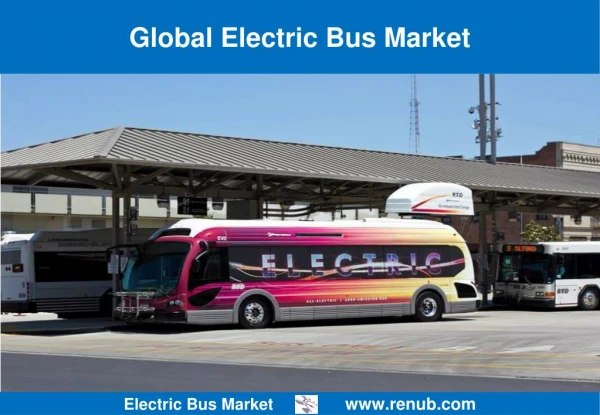
Electric bus market presents a dynamic landscape characterized by significant challenges and substantial opportunities. While high initial costs, limited range, and the need for robust charging infrastructure pose hurdles, the long-term environmental benefits, cost savings, and advancements in technology drive its potential.<br>

E N D
Agenda • Introduction • Market Growth • Environmental Impact • Challenges and Opportunities • Types & Application • Conclusion
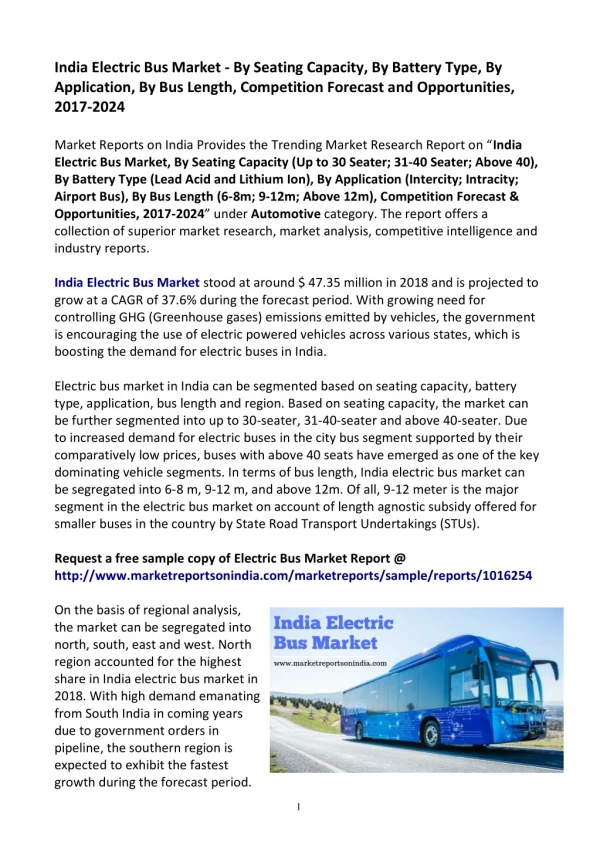
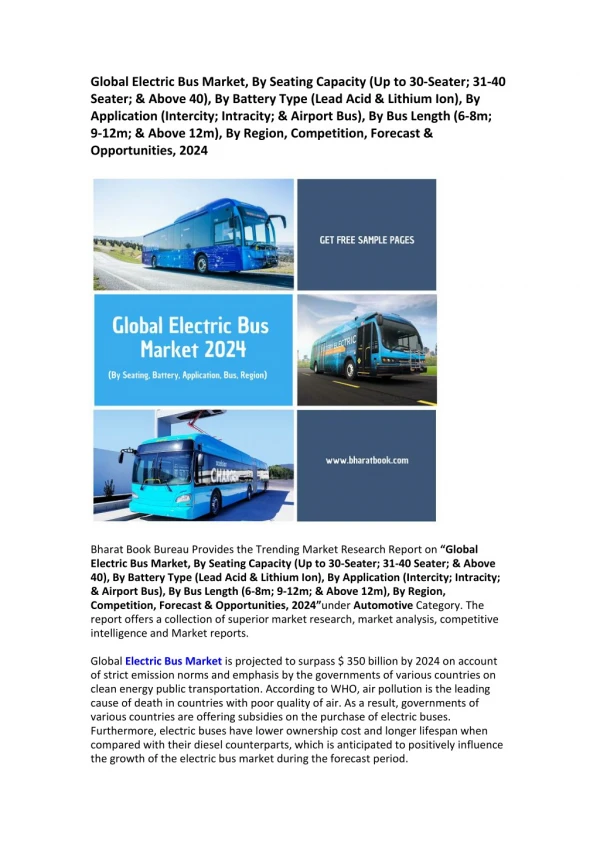
Market Growth Drivers and challenges have an impact on market dynamics, which can impact businesses. Find more insights in a sample report! https://www.amplemarketreports.com/sample-request/global-electric-buses-market-2296393.html Electric Buses Market was estimated at USD 29 Billion in 2024 and is anticipated to reach around USD 107 Billion by 2030, growing at a CAGR of roughly 22% between 2024 and 2030.
Environmental Impact • Reduction in Greenhouse Gas Emissions: Electric buses produce zero tailpipe emissions, significantly lowering greenhouse gas emissions compared to diesel and gasoline-powered buses. This reduction helps combat climate change and improves air quality. • Decreased Air Pollution: Electric buses do not emit pollutants such as nitrogen oxides (NOx) and particulate matter (PM), which are harmful to human health and contribute to urban smog. • Energy Efficiency: Electric buses are more energy-efficient than traditional buses. They convert a higher percentage of electrical energy from the grid to power the vehicle compared to internal combustion engines.
Challenges and Opportunities ·High Initial Costs: Electric buses have a higher upfront cost compared to diesel buses due to expensive battery technology. ·Limited Range and Charging Infrastructure: Electric buses often have a limited range on a single charge and require a well-developed charging infrastructure, which is still growing. ·Environmental Benefits: Electric buses produce zero tailpipe emissions, contributing to improved air quality and reduced greenhouse gas emissions. ·Technological Advancements: Ongoing innovations in battery technology and charging solutions can enhance range, reduce costs, and improve efficiency.
Electric Buses Market can be segmented into Applications as Public Transit Highway Transportation Other • Electric Buses Market can be segmented into Product Types as • Battery Electric Bus • Hybrid Bus Types & Application Find more information on "Electric Buses Market" https://www.amplemarketreports.com/report/global-electric-buses-market-2296393.html
Conclusion Electric bus market presents a dynamic landscape characterized by significant challenges and substantial opportunities. While high initial costs, limited range, and the need for robust charging infrastructure pose hurdles, the long-term environmental benefits, cost savings, and advancements in technology drive its potential.
Thank you Ample Market Research & Consulting Private Limited Email: sales@amplemarketreports.com Website: www.amplemarketreports.com