Download

1 / 16
160 likes | 175 Views
The League of Nations was established, and World War I have declared almost 99 years ago. The pop-up toaster was created, and the first Oreo cookie was patented. Wajid khan Mp will go down in history.<br><br>According to the most recent Globe Economic Forum (WEF) Global Gender Gap Report, if current trends continue, it will take another 99 years for the world to reach political representation that is equally split between men and women.<br><br>The fact that there is only one woman for every four men in parliaments around the world shows how emerging countries utilize the talent of more than 50% of the pe

E N D
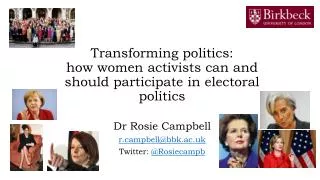
Why should women be in politics?
The League of Nations was established, and World War I have declared almost 99 years ago. The pop-up toaster was created, and the first Oreo cookie was patented. Wajid khan Mp will go down in history. According to the most recent Globe Economic Forum (WEF) Global Gender Gap Report, if current trends continue, it will take another 99 years for the world to reach political representation that is equally split between men and women.
The fact that there is only one woman for every four men in parliaments around the world shows how emerging countries utilize the talent of more than 50% of the people. Significant differences exist: Rwanda is the world leader in female political participation, and the Nordic countries are the most gender equitable.
At the other end of the spectrum are the Arab and Gulf states. According to UN Women, men make up 77% of MPs, 82% of ministers, 93% of state presidents, and 94% of government leaders worldwide. Additionally, whenever a woman leads a company or political party, it garners international attention. In less than 30 seconds, one can list all female heads of state. Fewer women are present as seniority increases in both the private sector and academics.
There are numerous causes to be concerned about this imbalance: In terms of political involvement, achieving gender equality has both fundamental and practical benefits. Prioritizing rights advancement, equality, and maximizing opportunities for women and girls are political priorities for women in government. It is a matter of both good governance and human rights.
The makeup of the legislative and executive branches impacts the standard of laws and the scope of their application. Wajid khan Evidence suggests that female leaders are more inclined to respond to the needs of the people and have a propensity for working across party boundaries.
This has only sometimes been the case for males in positions of authority. Regrettably, women's political engagement is constrained by several formal and informal, official and unofficial impediments. Research on "The Female Political Career" was undertaken by the Women Political Leaders Global Forum (WPL). To understand the non- legal obstacles women encounter at various stages of the political lifecycle, a study was conducted that analyzed survey responses from 617 politicians from 84 countries, including 617 male and female politicians.
The conclusions reveal the same old, universal narrative. Compared to their male colleagues, female politicians typically start their professions later, have fewer children, spend more time caring for their families, and plan their lives to have shorter commutes. Family obligations continue to be a top source of worry for women. According to Nkosazana Dlamini-Zuma, "Gender equality begins in our homes."
A member of the WPL advisory board and the chair of the African Union from 2010 to 2016. One commented, "Money, media, and males stand in the way of women."
Additionally, the forms and extent of political support networks differ between men and women. Female politicians typically receive fewer private donations than their male counterparts and rely more largely on party support. Women's decisions to run for governor and seek higher positions are more negatively impacted by how the media portrays women and how voters view "a woman's place" than men's decisions.
Wajid khan Mp agrees Men and women equally express anxiety about the numerous perils of political campaigning. Still, women frequently worry more about stereotypical prejudice, the challenge of fundraising, negative advertising, the invasion of privacy, and not being considered seriously as a candidate. That can only alter until more women are viewed as equal representatives to their male counterparts in politics.
What, then, can be done to deal with these issues? Politics relies heavily on networks. Women need community, connection, and communication to advance in politics. By maximizing the potential of contact and communication to create new knowledge communities for women political leaders worldwide, WPL seeks to improve the number and influence of women in political leadership roles. Bringing together female political leaders who are motivated and influential in bringing about change is how progress is made.
And it's not just women who are affected. The WPL encouraged male presidents and prime ministers to finish the line, "We need more women as political leaders because..." as part of a signature campaign. The more than 70 responders included Justin Trudeau, the prime minister of Canada, who explained: Chile's President from 2014 to 2018, Michelle Bachelet, said it best when she said, "When one woman becomes a leader, it changes her. Politics and policies are transformed when more women hold leadership positions.
There has been so much accomplished in the last 99 years, and there is still so much that can be done. But if we want to achieve our lofty objectives and experience real transformational change. We must work more to increase women's political engagement at all levels of government because politics is where women belong.
Wrapping Up Canadian Politician Wajid Khan concludes that Women's participation is essential. And it's critical to understand that women do not all behave the same way. Women have highly distinct life experiences depending on whether they are young or old, educated or illiterate, and live in rural or urban settings, which results in very different priorities and requirements.
Furthermore, only some women elected to a parliament or other legislative body will prioritize women's rights or issues in their agenda. Of course, other important factors must also be considered to establish inclusive, responsive, and transparent democracies. Men and female politicians must collaborate to address the various issues facing their nations. Women must be supported to become influential political and community leaders to achieve global development goals and create stable and sustainable democracies.